




2026 Chevrolet Trailblazer: Engine Specs And Performance
Quick Summary
The 2026 Chevrolet Trailblazer offers two turbocharged engine options that balance efficiency and everyday performance. The standard 1.2L engine provides solid fuel economy for commuting, while the available 1.3L engine delivers stronger acceleration, more towing capability, and a smoother nine-speed automatic transmission. Both engines offer available all-wheel drive, giving buyers flexibility based on their driving needs and budget.
Chevy gives the 2026 Trailblazer something many small SUVs do not: a choice under the hood. The 2026 Chevrolet Trailblazer engine lineup includes two turbocharged three-cylinders, so you can pick the one that fits your driving style and budget.
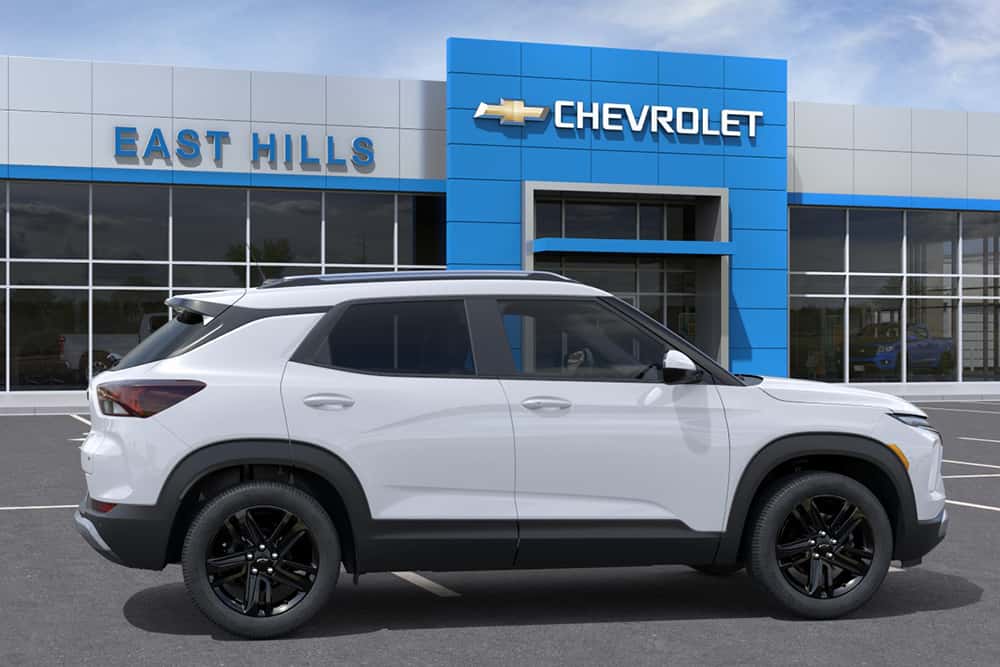
We have a 2026 Chevrolet Trailblazer on our lot at East Hills Chevrolet of Roslyn, ready for you to test drive. Here is how both engines compare and what each one brings to the road.
Two Turbo Engines to Choose From
Not every compact SUV gives you an engine upgrade. The Trailblazer does. Both motors are turbocharged inline-threes, but they differ in power, torque, and the transmission they pair with.
The base 1.2L turbo makes 137 horsepower at 5,000 rpm and 162 pound-feet of torque at 2,500 rpm. It comes with a six-speed automatic transmission. This engine is standard on LS and LT trims.
Stepping up to the 1.3L turbo adds 18 more horsepower, for a total of 155 at 5,600 rpm, and torque climbs to 174 pound-feet at just 1,600 rpm. That low peak torque gives it a little extra punch right when you hit the gas. The 1.3L pairs with a nine-speed automatic transmission, which offers smoother highway cruising and quicker downshifts. This engine comes standard on ACTIV and RS trims and is available as an option on LT.
Here is a quick side-by-side look:
- 2L Turbo: 137 hp, 162 lb-ft, 6-speed auto, standard on LS and LT
- 3L Turbo: 155 hp, 174 lb-ft, 9-speed auto, standard on ACTIV and RS, optional on LT
At East Hills Chevrolet of Roslyn, we can help you test drive both setups to feel the difference.
How Each Engine Feels Behind the Wheel
Both engines share a similar character. They are quiet at idle, spool up quickly, and do not feel underpowered around town. The real difference shows up when you push them.
The 1.2L handles daily commutes and errands with ease. It merges onto highways without drama and holds speed fine on flat roads. The six-speed auto does its job without calling attention to itself.
The 1.3L feels a bit more eager. The extra torque arrives lower in the rev range, so the Trailblazer jumps off the line with more energy. The nine-speed transmission helps here too. It keeps the engine in its sweet spot more often, which makes passing on two-lane roads feel more confident. If you drive with a full cabin or tackle hilly routes often, the 1.3L is worth the step up.
Fuel Economy Across Both Engines
Small turbo engines are built to save fuel, and both Trailblazer motors deliver solid numbers.
With front-wheel drive, the 1.2L earns an EPA-estimated 29 mpg in the city and 33 on the highway. Adding all-wheel drive drops those figures to about 26 city and 30 highway. The 1.3L posts similar numbers with front-wheel drive at roughly 29 city and 33 highway. With all-wheel drive, expect around 26 city and 29 highway.
The takeaway is that stepping up to the bigger engine does not punish you much at the pump. That makes the 1.3L a nice upgrade if you want more power without a big fuel economy penalty.
Towing and Hauling Ability
The Trailblazer is not a truck, but it can handle light towing when you need it. The 1.2L engine can pull up to 1,000 pounds when properly equipped. That covers a small utility trailer, a pair of jet skis, or lightweight camping gear.
The 1.3L bumps maximum towing to around 1,200 pounds. That extra 200 pounds might not sound like much, but it opens the door to slightly larger loads. If you need more towing muscle, we can point you toward larger options in our new Chevrolet inventory. Payload capacity for both engines falls in the 1,000 to 1,100-pound range depending on trim.
Picking the Right Engine for Your Drive
Your choice comes down to how you use your Trailblazer. The 1.2L keeps the purchase price lower and works well for solo commuters or small families sticking to city and suburban roads. The 1.3L adds passing power, a smoother nine-speed transmission, and a small bump in towing ability without hurting fuel economy much.
Think about your typical drive. Flat highways and light loads point toward the 1.2L. Hilly terrain, frequent highway passing, or plans to tow small trailers lean toward the 1.3L.
We also carry a range of pre-owned vehicles at our Roslyn dealership. If you are open to a previous model year with one of these engines, you might find even more value.
FAQs
What are the two engine options for the 2026 Chevy Trailblazer?
The standard engine is a 1.2L turbo three-cylinder with 137 hp and 162 lb-ft of torque. The available upgrade is a 1.3L turbo three-cylinder making 155 hp and 174 lb-ft of torque. Both are offered in the U.S. market.
Which trims get the 1.3L engine?
The 1.3L turbo comes standard on the ACTIV and RS trims. It is also available as an option on the LT trim. The LS trim comes only with the 1.2L engine.
Does the transmission change with each engine?
Yes. The 1.2L pairs with a six-speed automatic. The 1.3L pairs with a nine-speed automatic, which offers smoother shifts and better highway cruising.
Is all-wheel drive available with both engines?
Yes. Both the 1.2L and 1.3L engines can be paired with front-wheel drive or all-wheel drive.
How much can the 2026 Trailblazer tow?
The 1.2L engine can tow up to 1,000 pounds. The 1.3L engine increases maximum towing to about 1,200 pounds when properly equipped.
0 comment(s) so far on 2026 Chevrolet Trailblazer: Engine Specs And Performance